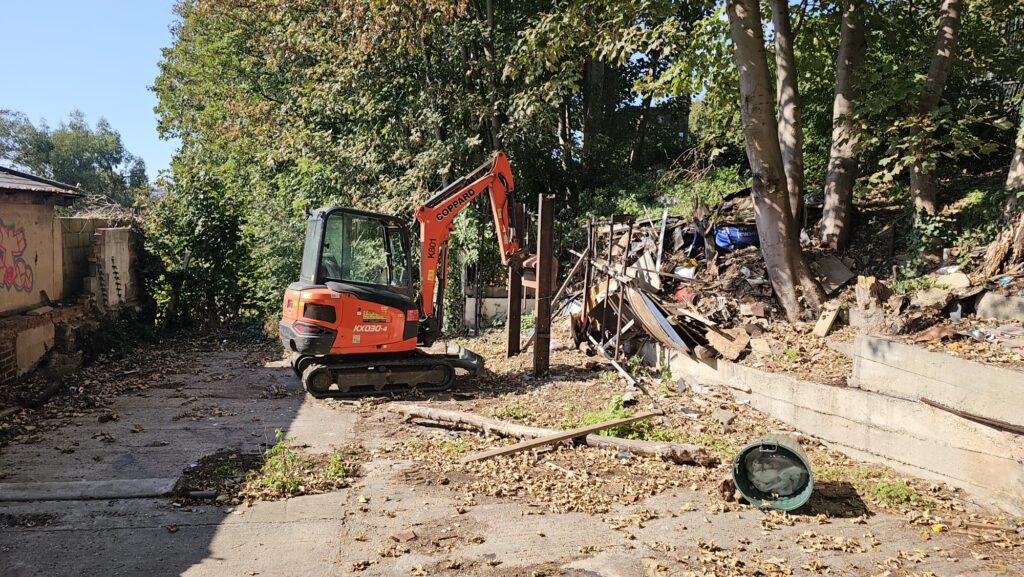
If you are digging out a site and sending the soil away, you cannot simply load it into a lorry and go. Before a landfill will accept excavated soil, it usually has to be tested first. Getting that wrong, or skipping it, can stop a job in its tracks or leave you paying far more than you needed to. WAC testing is the part of the process that catches most people out, so here is a plain-English guide to what it is and when it applies.
What does WAC stand for, and what is it?
WAC stands for Waste Acceptance Criteria. Every landfill is licensed to take only certain kinds of waste: inert (clean and non-reactive), non-hazardous, or hazardous. WAC testing takes a sample of your material, usually excavated soil, and checks it against the limits for each of those categories. This ensures everyone can see which class of landfill is allowed to accept it. It is a laboratory test that looks at what the soil contains and, just as importantly, what leaches out of it over time when it sits in the ground.
WAC testing is not the same as classifying your waste
This is the point that trips people up most, so it is worth being clear. WAC testing does not tell you whether your soil is hazardous or non-hazardous. That is a separate first step, called waste classification, which uses the history of the site and Environment Agency guidance to work out what you are dealing with. Only once the soil has been classified do you carry out WAC testing, to confirm which landfill will take it. Jumping straight to WAC without classifying the waste first is one of the most common and costly mistakes on a project.
When do you actually need it?
You need WAC testing when excavated soil or made ground is leaving site for disposal at a landfill. That covers a lot of everyday work: demolition, groundworks, basement digs, extensions on older or former industrial land, and brownfield redevelopment. If the material is heading to a licensed landfill, testing is effectively required. And the legal duty to get it right sits with you as the person producing the waste, not with the landfill that receives it.
Why it is worth getting right
Two reasons: cost and delay. Hazardous landfill is far more expensive than inert or non-hazardous, so correct testing can stop you paying top rate to dispose of soil that never needed it. Soil turned away at the landfill gate, because it was not tested or was tested incorrectly, brings the whole job to a halt while lorries sit idle. A proper test up front, ideally scheduled alongside the classification, avoids both. Results typically take around ten working days, so it pays to plan it in early rather than treat it as an afterthought.
If you have a project with soil coming off site and you are not sure what testing you need, the simplest first step is a quick chat. SE Asbestos Surveys take the samples on site, use independent laboratories for the analysis, and give you a clear management plan with the results attached, across Essex, London and the South. Call 07872 054963 for a free no-obligation quote or visit se-asbestos-surveys.co.uk.